
Published on May 11, 2026 | 8 minute read
When a tooth is missing, the gap it leaves behind can affect more than appearance. Teeth work as a team, and when one is lost, the rest of the mouth often feels the change. Chewing can become less comfortable, neighboring teeth may begin to shift, and the balance of your bite can slowly change. Dental bridges are designed to restore that missing space so your smile feels more complete and your bite can function more smoothly again.
At Woo Dental, dental bridges are used to replace one or more missing teeth in a way that supports both comfort and appearance. They are a reliable option for patients who want a fixed solution that does not come out of the mouth. If you are missing a tooth and want to restore your ability to chew, speak, and smile with greater ease, dental bridges may be worth exploring.
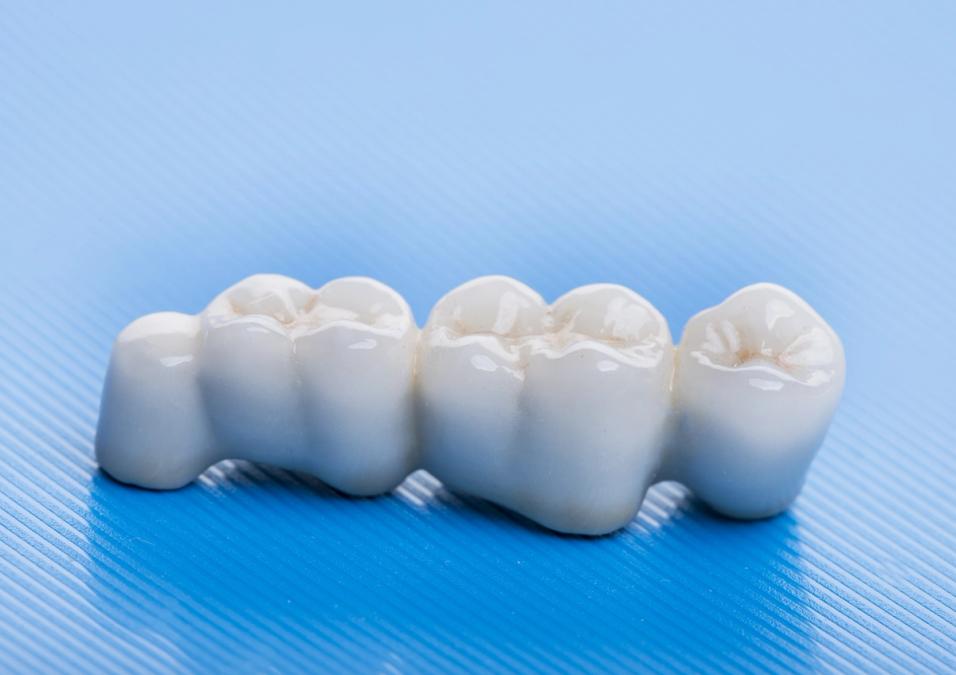
Dental bridges are restorations that replace one or more missing teeth by spanning the gap between healthy support points. A traditional bridge uses crowns on the teeth on either side of the missing space, with an artificial tooth in between. Once in place, the bridge fills the gap and stays in the mouth like a natural part of your smile.
Dental bridges are designed to:
They are called bridges because they literally bridge the empty space where a tooth used to be.
Some people feel they can live with a missing tooth, especially if it is not in the front. But over time, even one missing tooth can create a chain reaction in the mouth.
Without replacement, the gap can lead to:
Replacing the missing space with dental bridges can help keep the rest of the smile more stable and reduce these long-term issues.
Traditional dental bridges depend on support from the teeth on either side of the gap. These support teeth are carefully shaped so custom crowns can fit over them. Attached between those crowns is the replacement tooth, called a pontic, which fills the missing area.
Once the final bridge is placed, the crowns anchor it in position. The result is a fixed restoration that stays in place while you eat, speak, and go about your day.
In some cases, implant-supported dental bridges may also be an option. Instead of using natural teeth for support, implants hold the bridge in place. The right choice depends on your oral health, the number of teeth missing, and the condition of the neighboring teeth.
Dental bridges may be a good option if:
An evaluation at Woo Dental can help determine whether dental bridges are the right fit, or whether another treatment such as a dental implant would be better for your specific needs.
Getting dental bridges usually involves a few steps, each designed to make sure the final result fits well and feels natural.
The dentist begins by examining the teeth and gums, taking X-rays if needed, and discussing your treatment goals. This helps confirm whether the support teeth are strong enough and whether the area is ready for a bridge.
For a traditional bridge, the teeth on either side of the gap are shaped so crowns can fit over them properly. This is done carefully and with local numbing for comfort.
Once the teeth are prepared, impressions or digital scans are taken. These are used to create the custom dental bridge, making sure it matches your bite and the look of your smile.
A temporary bridge may be placed while the final one is being made. This helps protect the prepared teeth and gives you something to wear in the meantime.
When the permanent bridge is ready, it is checked for fit, comfort, and bite alignment. Once everything looks and feels right, the bridge is cemented into place.
For many patients, dental bridges offer an effective balance of function, comfort, and appearance.
Dental implants are an excellent option for many missing teeth, but that does not mean they are the best solution for every patient. Some people choose dental bridges because they prefer a fixed restoration without implant surgery. Others may already have neighboring teeth that need crowns, which can make a bridge a practical choice.
Dental bridges may also appeal to patients who want a more straightforward timeline or who are not candidates for implants due to bone limitations, medical considerations, or personal preference.
The best treatment is the one that fits your health, your goals, and the reality of your smile today.
Good care is essential if you want your dental bridges to last. Since the bridge is fixed in place, special attention is needed to keep the area around it clean.
Helpful habits include:
When properly maintained, dental bridges can serve patients well for many years.
Like other dental restorations, dental bridges do not last forever. Over time, wear and tear, changes in the supporting teeth, or gum issues may affect how the bridge functions. That is why regular checkups matter. Small issues can often be spotted early before they cause major problems.
If a bridge becomes loose, damaged, or difficult to clean, the dentist can help determine whether it should be repaired, replaced, or upgraded to another option.
Missing a tooth can affect far more than one small spot in your mouth. Over time, the gap can influence comfort, chewing, appearance, and the stability of surrounding teeth. Dental bridges help restore that missing space so your smile can function in a more balanced and dependable way.
If you have a gap that is making daily life harder, or if you simply want to understand your options for tooth replacement, a professional consultation is the best place to start. Contact Woo Dental in Jersey City at 472 Central Ave, Jersey City, NJ 07307, (551) 298-3878 or in Lodi at 2 Memorial Dr #8b, Lodi, NJ 07644, (862) 394-0032 to schedule your consultation or book an appointment to learn whether dental bridges are right for you.


