
Published on Jun 10, 2026 | 9 minute read
Losing several teeth in a row can change more than the look of a smile. It can make one side of the mouth harder to chew with, affect the way certain words sound, and gradually change how the bite comes together. When multiple teeth are missing, many patients want a replacement option that feels steady and natural, not something that shifts or comes in and out. Implant bridges are designed for exactly that purpose.
At Woo Dental, implant bridges provide a way to replace several missing teeth with strong, stable support. Instead of depending on natural teeth for anchoring, implant bridges are supported by dental implants placed in the jawbone. This creates a fixed solution that can feel secure and function well in everyday life. For patients missing a few teeth in one area, implant bridges can be an excellent alternative to traditional bridges or removable partial dentures.
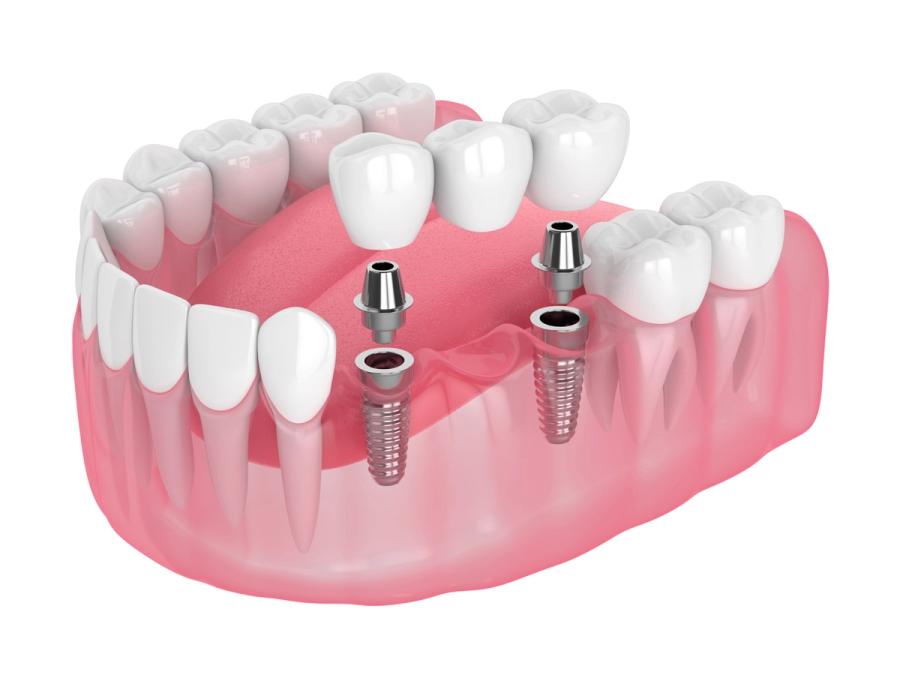
Implant bridges are fixed dental restorations used to replace multiple missing teeth. Rather than placing one implant for every missing tooth, implant bridges use a smaller number of implants to support a multi-tooth bridge. This allows the restoration to span the empty space while still being anchored securely in the jaw.
An implant bridge usually includes:
Because implant bridges are attached to implants rather than clipped to nearby teeth or removed at night, they offer a stable feel that many patients appreciate.
When more than one tooth is missing, the effects on the mouth can become even more noticeable. Missing teeth can lead to:
Implant bridges help address these issues by restoring the missing section in a way that supports both appearance and function. Replacing several missing teeth is not only about how the smile looks, it is also about helping the mouth work more smoothly and comfortably.
A traditional bridge usually depends on the natural teeth on either side of a gap. Those teeth are shaped for crowns, and the replacement teeth are attached between them. Implant bridges work differently. They are supported by implants placed in the jawbone, which means the neighboring natural teeth do not need to be reduced to hold the bridge in place.
This difference can be important because implant bridges:
For many patients, this makes implant bridges feel like a strong long-term option when several teeth are missing together.
Implant bridges may be recommended if:
A consultation at Woo Dental can help determine whether implant bridges are the right fit for your situation. Even if you have been missing teeth for a while, there may still be options available to rebuild the area and support implants successfully.
Getting implant bridges usually takes place in phases so that the foundation can heal properly and the final bridge can be customized carefully.
The process begins with an exam, imaging, and discussion of your goals. At this stage, the dentist evaluates the number of teeth missing, the health of the gums, the amount of available bone, and whether implant bridges are the best option compared with other forms of tooth replacement.
The implants are placed into the jawbone where they will support the bridge. These implants act like replacement roots. After placement, the area is given time to heal and allow the implants to bond with the bone.
During healing, a temporary solution may be used so that the gap remains functional and presentable. The healing phase is important because it creates the stable foundation that makes implant bridges work so well.
Once the implants are fully integrated, a custom bridge is designed and attached. The bridge is carefully shaped to fit your bite, match your smile, and feel natural during daily use.
Many patients choose implant bridges because they want replacement teeth that feel more secure than a removable option. Since the bridge is attached to implants, it does not come in and out, and it does not depend on clasps or other removable supports.
That can make a meaningful difference in daily comfort. Implant bridges often help patients feel more confident when:
That sense of stability is one of the biggest reasons implant bridges are such a valued option.
For many patients, these advantages make implant bridges a strong choice when several teeth are missing in one section of the mouth.
Implant bridges do more than fill a gap. They also help support the long-term balance of the mouth. When missing teeth are left untreated, the nearby teeth may drift, the opposite teeth may shift, and chewing pressure may become uneven. Over time, those changes can create more wear and more strain on the rest of the smile.
By replacing the missing space with implant bridges, patients often gain:
This is one reason implant bridges are often seen as both a restorative and a preventive solution.
Like natural teeth and other restorations, implant bridges require daily care to stay healthy and last well over time. Patients are usually advised to:
Although implant bridges are very stable, they still need attention and maintenance. The implants themselves do not get cavities, but the surrounding gum tissue and supporting bone still need to stay healthy.
Missing several teeth in one area can affect more than just the appearance of your smile. It can change how your mouth functions every day and make simple tasks like chewing feel less comfortable than they should. Implant bridges offer a way to replace that missing section with a restoration that feels fixed, strong, and dependable.
If you are looking for a stable alternative to removable tooth replacement, implant bridges may be worth exploring. To learn whether implant bridges are right for you, contact Woo Dental in Jersey City at 472 Central Ave, Jersey City, NJ 07307, (551) 298-3878, in Lodi at 2 Memorial Dr #8b, Lodi, NJ 07644, (862) 394-0032, or in Ridgefield at 555 Bergen Blvd, Ridgefield, NJ 07657, (551) 313-7414 to schedule your consultation and take the next step toward a stronger, more complete smile.


